Your piece. A different point of view.
A replay should give the work room to breathe without inventing the street around it.
Inside the build · concepts and current progressThere’s a point when you put the can down and walk backwards. The corrections stop being separate marks. The piece starts working as a whole. That is the feeling behind the replay.
We want the camera to start close, then open the view with a restrained pull-back and a little rise or bank where the image can support it. The drone is the camera language: the pace, acceleration, braking and sense of looking again.
One photo gives us one view.
A frontal photograph records what the camera saw. It does not record behind the wall, round a corner or above an obstruction. A convincing-looking orbit is not automatically an authentic one.
A depth-based warp takes visible pixels and an approximate depth field, moves a virtual camera and projects those pixels into another view. A nearer region can shift more than a farther one. That difference is what separates perspective movement from a flat pan or zoom.
Relative depth is a relationship, not a tape measure.
MiDaS describes its output as relative depth. It can help rank visible surfaces by distance; that does not turn a single photo into a surveyed scene with reliable metre measurements. It also does not give the camera genuine pixels for surfaces that were never visible.
That is why the artwork sets the motion budget. A smaller reveal with readable letters is better than a bigger move that tears a signature apart. Holes, duplicated edges, stretched fills and aggressive cropping are reasons to reduce movement or fall back to the original image.
The handoff matters as much as the shot.
The intended replay follows a larger moment: you took on a challenge, made or discovered something, and photographed it. The original should still be there when the sequence ends. Leaving the app and returning should not lose the capture or award a second reward.
Sound and timing can strengthen that moment. They cannot stand in for depth, and a floating altitude number would not make an estimated camera move measured drone footage. We want the piece to feel recognised without making false claims about how the view was made.
Keep the source
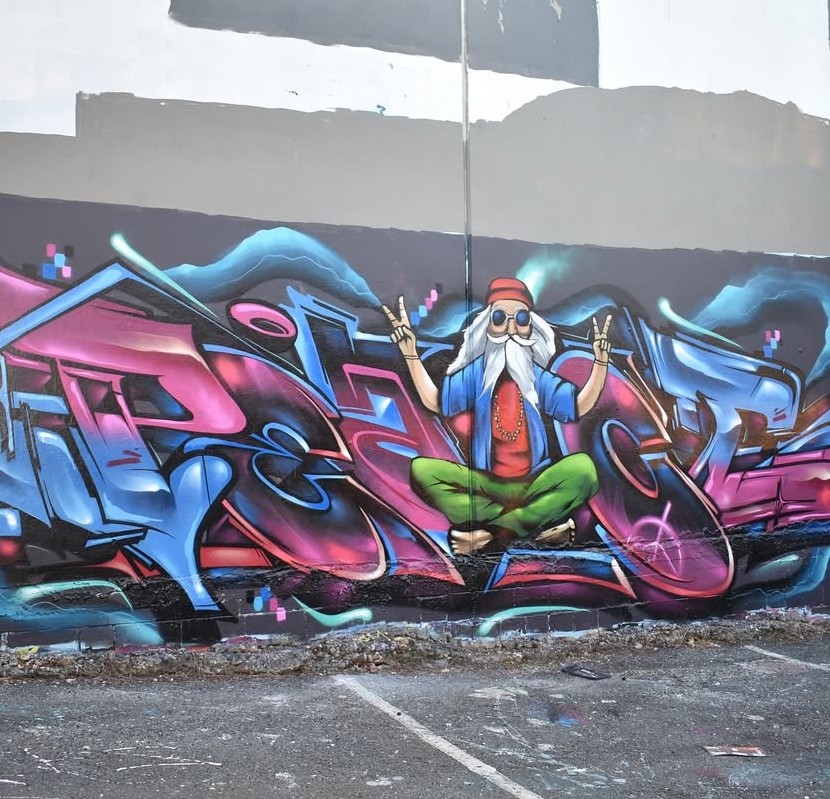
The photograph is the record of what was painted. Lettering, signatures and colours stay the source. The illustration uses simple shapes, not replacement artwork.
Read the sources.
External sources explain the underlying methods. They do not verify this app’s implementation.